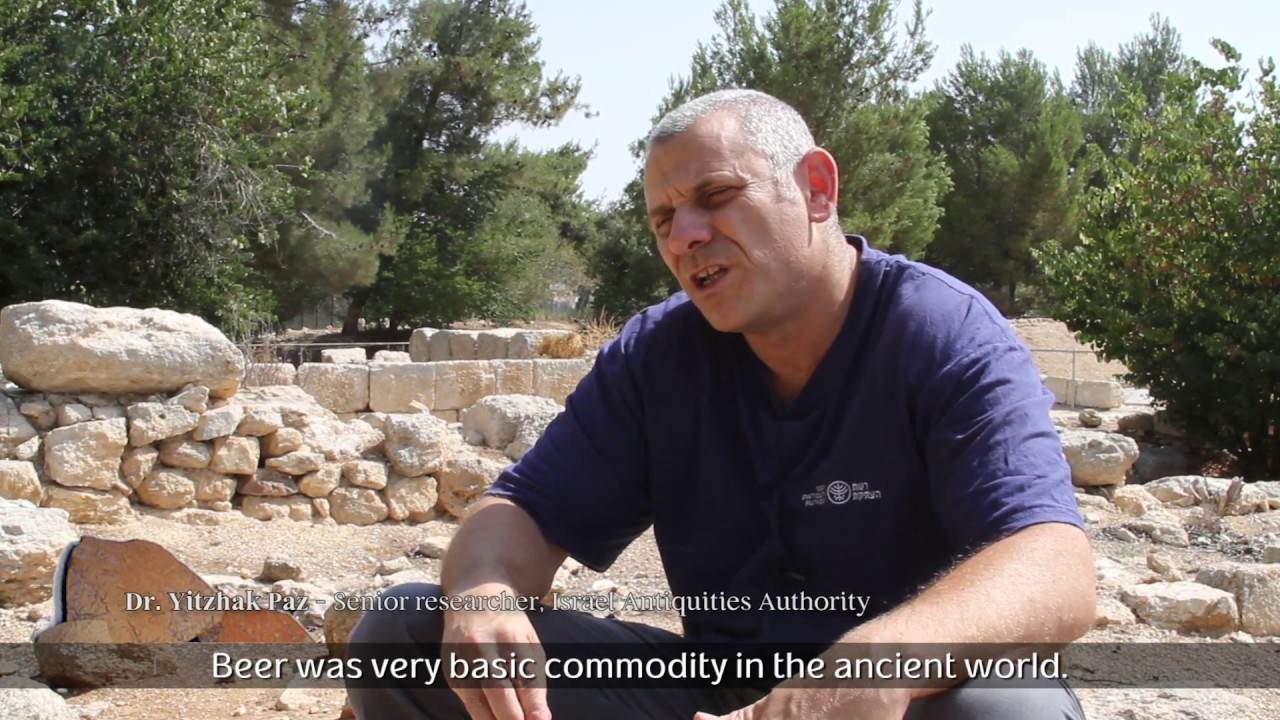
What kind of beer did Pharaoh, king of Egypt, like to drink?
34
| 0
1,872 צפיות
תיאור
Israeli researchers produced beer from yeast found in pottery used thousands of years ago
Research led by scholars at Hebrew University, the Israel Antiquities Authority, Tel Aviv University and Bar-Ilan University, revealed a unique way to isolate yeast from ancient pottery, from which high-quality beers were then produced. Dr. Ronen Hazan from Hebrew University and Dr. Yitzhak Paz from the Israel Antiquities Authority, who are among the leaders of the research, noted that "we now know what Philistine and Egyptian beers tasted like."
What kind of beer did Pharaoh like to drink? In ancient times, beer was an important ingredient in one's daily diet. Great powers were attributed to beer in the ancient world, particularly for religious worship and healing purposes. The pottery used to produce beer in antiquity served as the basis for this new research. The research was led by Dr. Ronen Hazan and Dr. Michael Klutstein, microbiologists from the School of Dental Medicine at Hebrew University, who usually study medicine. They examined the colonies of yeast that formed and settled in the pottery's nano-pores, in an attempt to determine how the yeast had been preserved for so many years. Ultimately, that same yeast produced high-quality beer fit for drinking.
During the first part of the research, which was carried out in several stages, researchers sought the help of the Kadma winery in Kfar Uriyah which specialized in wine making in clay vessels, and proved that yeast can be isolated from pottery even after sitting in the sun for two years. The yeast isolated by the researchers was photographed by Dr. Tziona Ben Gedalya from the Judaea Region Research and Development Center using a scanning electronic microscope. Following this initial examination, the researchers expanded their study further by contacting archaeologists Dr. Yitzhak Paz from the Israel antiquities Authority, Prof. Aren Maeir from Bar-Ilan University and Prof. Yuval Gadot and Prof. Oded Lipschitz from Tel Aviv University, who supplied them with authentic shards of pottery identified as ancient beer and mead (honey wine) vessels/jugs.
The collection of pottery was selected from different historical periods, between 3,000 BCE through the 4th century BCE, from the founding of the first united Egyptian kingdom in the days of king Narmer to the days of Hazael, king of Aram, and the days of Nehemiah, who, according to the bible, governed Judaea under Persian rule. The pottery was gathered from different sites, including Ein HaBesor in the Negev, salvage excavations on HaMasger street in Tel Aviv and University digs in Tel Tzafit and Ramat Rachel.
At this point of the research, a student, Tzemach Aouizerat, managed to isolate yeast from six different shards of pottery. The researchers purified and sequenced the full genome of each yeast and then turned to Dr. Amir Szitenberg from the Dead Sea and Arava Science Center who helped analyzing it. This analysis revealed that the isolated yeast from the ancient beer jugs are similar to those isolated from traditional beers produced in Africa such as the Ethiopian Tej, as well as modern beer yeast.
In the last stage, the researchers produced beers from isolated yeast with the help of the beer expert, Itai Guttman. Once produced, the beers' flavors and fragrances were chemically analyzed by Dr. Eliyashiv Drori from Ariel University, as well as a team of certified tasters on behalf of the International Beer Judge Certification Program (BJCP) led by Shmuel Nakai. The test results concluded the beers were of high-quality and fit for drinking. Furthermore, much to the researcher's surprise, in addition to the beer jugs, they succeeded in isolating a substantial amount of yeast from ancient candles, which appear to have originated from olive oil. This finding supports the assumption that the yeast colonies are capable of establishing themselves in pottery for many years.
תגיות

רשות העתיקות
10,218 צפיות